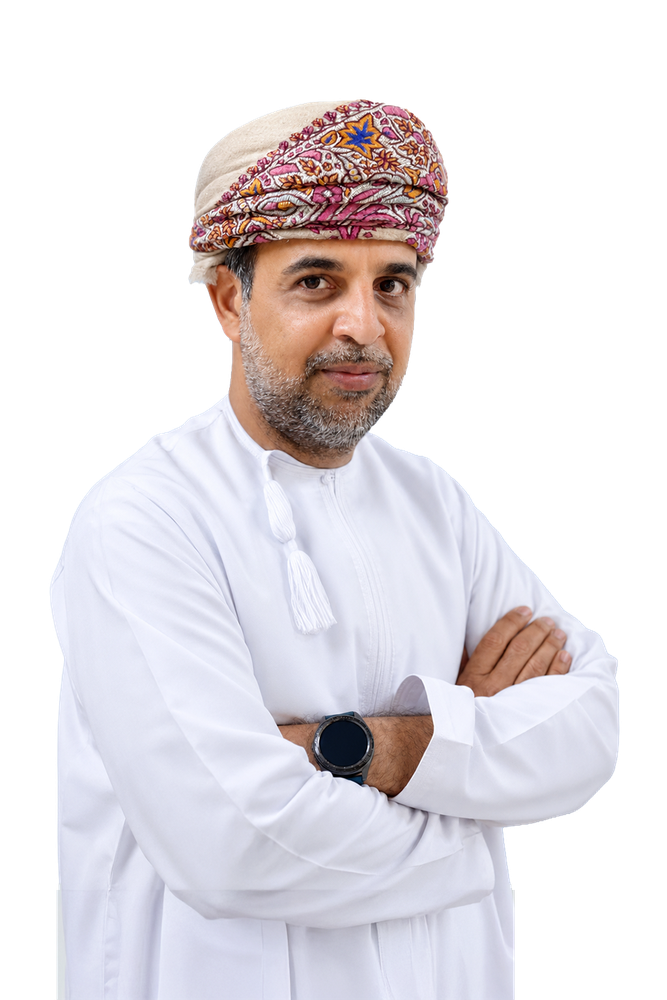
Dr. Ghalib Al Badaai
Senior Consultant — Minimally Invasive and Oncological Urological Surgery
- FEBU
- DESC
- DES
- MRCS
- MD
About Dr. Ghalib
Dr. Ghalib is a Senior Consultant Urological Surgeon specialising in oncological and minimally invasive urology.
He obtained his BSc in Health Sciences and his MD from Sultan Qaboos University in 2004, and went on to gain the MRCS of the Royal College of Surgeons in Ireland in 2010. He completed residency training in urology and was awarded the French board certificate (DES) in 2014.
He then undertook a structured two-year fellowship specialising in oncological and minimally invasive urology, completing the French DESC certificate and the European Board of Urology qualification (FEBU) in 2016.
Returning to Sultan Qaboos University Hospital, he contributed to the introduction of a number of laparoscopic and endoscopic procedures for both cancer and non-cancer urological conditions, and to the development of the hospital’s minimally invasive urology service.
His practice covers endoscopic and minimally invasive treatment of urinary tract stones, surgery for urological cancers, laparoscopic urological surgery, endoscopic treatment of the prostate and urethra, surgery for testicular conditions, and the investigation of blood in the urine and lower urinary tract symptoms.
Conditions Treated
Urinary Stone Disease
Kidney stones
Ureteric stones
Bladder stones
Recurrent stone disease requiring assessment
Urological Cancers
Kidney cancer
Bladder cancer
Prostate cancer
Testicular cancer
Cancer of the ureter and renal pelvis (upper tract urothelial cancer)
Prostate and Urinary Flow Conditions
Benign enlargement of the prostate
Lower urinary tract symptoms, including poor flow, frequency and urgency
Urethral stricture
Kidney, Ureter and Testicular Conditions
Pelvi-ureteric junction obstruction
Renal cysts
Hydrocele
Varicocele
Epididymal cyst
Investigation of Urinary Symptoms
Blood in the urine (haematuria)
Symptoms requiring cystoscopy or further urological assessment
Procedures & Services
Endoscopic Stone Treatment
Ureteroscopy (URS) for ureteric stones
Flexible ureteroscopy and retrograde intrarenal surgery (RIRS)
Percutaneous nephrolithotomy (PCNL) for larger kidney stones
Extracorporeal shock wave lithotripsy (ESWL)
Cancer Surgery
Radical nephrectomy (removal of the kidney)
Partial nephrectomy (kidney-sparing tumour removal)
Nephroureterectomy
Radical prostatectomy
Cystectomy (removal of the bladder)
Transurethral resection of bladder tumour (TURBT)
Orchidectomy
Laparoscopic Urological Surgery
Laparoscopic nephrectomy
Laparoscopic pyeloplasty for pelvi-ureteric junction obstruction
Laparoscopic nephroureterectomy
Laparoscopic marsupialisation of renal cysts
Laparoscopic nephrolithotomy
Laparoscopic ureterolithotomy
Prostate and Urethral Procedures
Transurethral resection of the prostate (TURP)
Transurethral incision of the prostate (TUIP)
Transurethral vaporisation of the prostate (TUVP)
Internal urethrotomy for urethral stricture
Testicular and Scrotal Surgery
Hydrocele repair
Varicocele surgery
Excision of epididymal cyst
Diagnostic Procedures
Cystoscopy
Investigation and work-up of haematuria
Assessment of lower urinary tract symptoms
Professional Experience
- from 2016
Consultant Urological Surgeon
Sultan Qaboos University Hospital, Muscat, Oman
- 2014–2016
Fellowship in oncological and minimally invasive urology
France
Urology Residency
France
Professional Contributions
Contributed to the introduction of laparoscopic and endoscopic procedures for oncological and non-oncological urological disease at Sultan Qaboos University Hospital
Involved in the development of minimally invasive urology services in Oman
Education & Training
FEBU
Fellow of the European Board of Urology
2016DESC
French subspecialty certificate in oncological and minimally invasive urology, following a two-year structured fellowship
2016DES
French board certificate in Urology
2014MRCS
Royal College of Surgeons in Ireland
2010MD (Doctor of Medicine)
Sultan Qaboos University, Muscat, Oman
2004BSc in Health Sciences
Sultan Qaboos University, Muscat, Oman
Frequently Asked Questions
Book Your Consultation with
Dr. Ghalib in Muscat
Book your consultation with Dr. Ghalib in Muscat, Oman. Our team is here to help you arrange the right appointment.
Prefer to speak with us? Call Dr. Ghalib and our team will assist with appointment availability and insurance enquiries.